James Earl Ray
Convicted assassin of Martin Luther King Jr.

James Earl Ray was an American criminal convicted of the assassination of Martin Luther King Jr. on April 4, 1968, at the Lorraine Motel in Memphis, Tennessee. He pleaded guilty in 1969 and was sentenced to 99 years in prison, though he later made many attempts to withdraw his guilty plea and to be tried by a jury, but was unsuccessful. His political views were aligned with the segregationist platform, and he was a staunch supporter of the segregationist Alabama governor George Wallace and his 1968 presidential campaign with the American Independent Party.
- born
- March 10, 1928, Alton, Illinois
- died
- April 23, 1998, Madison, Tennessee
- field
- Criminal
- nationality
- American
- known_for
- Assassination of Martin Luther King Jr.
Verified Timeline
Lore & Background
James Earl Ray was born on March 10, 1928, in Alton, Illinois, to George Ellis Ray and Lucille Ray. He was the oldest of nine children, including John Larry Ray, Franklin Ray, Jerry William Ray, Melba Ray, Carol Ray Pepper, Suzan Ray, and Marjorie Ray, who died in a fire as a young child in 1933. Ray left school at age 12. He joined the U.S. Army at the close of World War II and served in Germany, but was discharged in 1948 for ineptitude and lack of adaptability. Before the King assassination, Ray committed a variety of crimes. His first conviction was for burglary in California in 1949. In 1952, he served two years for the armed robbery of a taxi driver in Illinois. In 1955, he was convicted of mail fraud after stealing money orders in Hannibal, Missouri, and was imprisoned for four years at Leavenworth. In 1959, he was caught stealing $120 in an armed robbery of a Kroger store in St. Louis and sentenced to twenty years. He escaped from the Missouri State Penitentiary on April 23, 1967, by hiding in a truck transporting bread from the prison bakery. After his escape, Ray traveled under aliases, including Eric Starvo Galt. He bought a white 1966 Ford Mustang for $1,995 in cash in Birmingham, Alabama, on August 30, 1967. He applied for and received an Alabama driver's license under the name Eric Starvo Galt with license #2848947. He bought a .38 revolver in Birmingham. He went to Mexico, staying in Acapulco and Puerto Vallarta, and attempted to establish himself as a pornographic film director. He left Mexico around November 16, 1967, arriving in Los Angeles three days later, where he attended bartending school and took dance lessons. He volunteered at the George Wallace campaign headquarters in North Hollywood. He considered emigrating to Rhodesia (now Zimbabwe), which was his intended destination after King's assassination. On March 5, 1968, Ray had an operation on his nose. On March 18, he left Los Angeles and drove to Atlanta, arriving on March 24. He bought a map of Atlanta; FBI agents later found the map with the locations of King's church and residence circled. On March 30, in Birmingham, he bought a Remington Model 760 Gamemaster .30-06-caliber rifle, a box of 20 cartridges, and a Redfield 2x–7x scope, giving his name as Harvey Lowmeyer. He drove back to Atlanta and read The Atlanta Constitution, which reported King's planned return to Memphis. On April 2, he packed a bag and drove to Memphis. On April 3, Ray rented a room at the New Rebel Motel. On April 4, he checked into a rooming house managed by Bessie Brewer across from the Lorraine Motel, renting room 5B under the name John Willard. He bought a pair of binoculars. At 6:01 PM, he locked himself in the bathroom, stood in the bathtub, opened the window, and fired a single shot at King with the Remington rifle. He fled, dropping a package containing the rifle and binoculars with his fingerprints. Ray fled to Atlanta in his Mustang, arriving in the early morning hours of April 5. He left his car in a housing project's parking lot; it was discovered by authorities on April 11. He boarded a bus to Cincinnati at 1:30 PM, arrived in Cincinnati on April 6 at 1:30 AM, then took another bus to Detroit, then a cab to Windsor, Canada. He took a train to Toronto, arriving at a rooming house at 5 PM. He stole a Canadian's identity to acquire a passport by pretending to be a passport official and calling a man named Ramon Sneyd; when Sneyd said he had no passport, Ray got a passport in his name. On May 2, he paid for a round-trip plane ticket to London, leaving May 6 and arriving May 7. He replaced the return ticket with a ticket to Lisbon, Portugal, on May 7, stayed briefly, and returned to London on May 17. On June 4, he robbed the Trustee Savings Bank of London branch in Fulham, stealing £150. That same day, he called The Daily Telegraph to speak with Ian Colvin about becoming a mercenary in Africa. Ray was arrested at London Heathrow Airport by Special Branch officer Phil Birch as he attempted to leave for Brussels, using the false Canadian passport. Ray was convicted in 1969 after entering a guilty plea, thus forgoing a jury trial and the possibility of a death sentence, and was sentenced to 99 years of imprisonment. He later made many attempts to withdraw his guilty plea and to be tried by a jury, but was unsuccessful. Ray died on April 23, 1998, at age 70, at Nashville Memorial Hospital in Madison, Tennessee, from complications related to kidney disease and liver failure caused by hepatitis C, having served twenty-nine years in prison. In 1994, Loyd Jowers, a restaurant owner, publicly began claiming that he had been part of a conspiracy to assassinate King and that Ray was a scapegoat. In a Memphis civil trial in 1999, a jury unanimously concluded that Jowers was liable for the assassination, that King was the victim of a conspiracy, and that various U.S. governmental agencies had conspired to murder King and frame Ray. The King family has consistently said that they believe Ray was innocent, although this conclusion was disputed by the U.S. Department of Justice in 2000. The King family has stated that they believe the true murderer was a Memphis Police Department officer, Lieutenant Earl Clark.
Reader's Guide
James Earl Ray's significance lies in his central role in one of the most pivotal assassinations in American history. His guilty plea in 1969, which avoided a jury trial and possible death sentence, left many questions unanswered. Ray's later attempts to withdraw his plea and his claims of being a scapegoat fueled enduring conspiracy theories. The 1999 civil trial verdict, which found that a conspiracy involving government agencies existed, further complicated the historical record, though the Department of Justice rejected that conclusion. Ray's case remains a touchstone for debates about justice, racial violence, and the limits of official narratives. His alignment with segregationist politics and his attempted flight to Rhodesia underscore the racial and political tensions of the era. The King family's continued belief in Ray's innocence, despite official findings, keeps the case open in public memory.
Did You Know?
- Ray escaped from the Missouri State Penitentiary on April 23, 1967, by hiding in a truck transporting bread from the prison bakery.
- After the assassination, Ray obtained a passport by calling a man named Ramon Sneyd and pretending to be a passport official; when Sneyd said he had no passport, Ray got a passport in his name.
- Ray was arrested at London Heathrow Airport by Special Branch officer Phil Birch as he attempted to leave the UK for Brussels using a false Canadian passport.
- In 1999, a Memphis civil trial jury unanimously concluded that Loyd Jowers was liable for the assassination and that various U.S. governmental agencies had conspired to murder King and frame Ray.
- The King family has stated that they believe the true murderer was a Memphis Police Department officer, Lieutenant Earl Clark.
International Classification and Self-Image
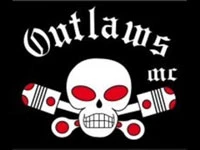
The Outlaws Motorcycle Club, occasionally styled as the American Outlaws Association, occupies a deeply contested space in how it is perceived by the outside world. Law enforcement agencies across multiple nations have officially designated the organization as a motorcycle gang, pointing to a broad catalogue of alleged criminal enterprises that spans drug trafficking, extortion, money laundering, prostitution networks, weapons trafficking, and violent confrontations aimed squarely at rival clubs. Despite this sweeping international condemnation, members have consistently pushed back against the criminal label. They characterize the group as nothing more than a community of motorcycle enthusiasts who simply choose to live outside mainstream conventions. In their telling, the allegations levied by investigators and prosecutors are grossly inflated and fail to reflect what the club actually is. This tension between official classification and self-identification has followed the Outlaws to every continent where they have planted a chapter, from the streets of Belgium to the highways of Ontario.
The Belgian Chapter and Its Violent History
The Outlaws' Belgian presence, which took root with a chapter in Mechelen in March 1999, has been shadowed by a string of violent incidents that underscore the club's deep entanglement in organized crime. In April 2000, full-patch member Jan Wouters was shot dead by fellow Outlaw André Renard on the club's own property in Mechelen, with two other members present. All three received life sentences, and while the convicted men described the killing as the result of a heated argument that spiraled out of control, observers widely believed it was a sanctioned execution ordered by the club's upper hierarchy. Rivalry with the Hells Angels and the Red Devils escalated sharply in 2009, when a nighttime raid on an Outlaws clubhouse in Kortrijk left three members wounded. The following year, three Outlaws were shot dead in Eisden just days after the club opened a new clubhouse, an attack attributed to Hells Angels members two of whom served as paracommandos in the Belgian Army. The club's internal code of silence has made resolving these cases extraordinarily difficult for investigators.
Canadian Expansion and the War with Rival Clubs
The Outlaws first set foot in Canada on July 1, 1977, when several Satan's Choice chapters under the direction of Garnet "Mother" McEwen transferred their patches to join the Outlaws. Over the following decades the club grew to claim seven chapters and roughly sixty members across the country, with a presence in Newfoundland and Labrador as well as Ontario. In Ontario the Outlaws held the position of the largest motorcycle club until the year 2000, maintaining chapters in Toronto, Ottawa, South Simcoe, and Sault Ste. Marie. The club's Canadian history is marked by brutal confrontations with rival gangs. In July 1983 a bus carrying two Hells Angels was fired upon in Wawa by a group of Outlaws. That same September, member David Eugene Séquin stormed a Chosen Few clubhouse in Emeryville, killing three people—including the Chosen Few's national president—and wounding three others before eventually being killed in a police shootout in Illinois in 1985.
Law Enforcement Confrontations and the Code of Silence
The Outlaws' relationship with law enforcement has been defined by large-scale crackdowns and the persistent challenge of internal silence. In September 2002, the Ontario Provincial Police launched Project Retire, a sweeping operation that resulted in the arrest of fifty-six Outlaws in a single coordinated action. Individual members have also clashed directly with officers; in 2007, Marcus Cornelisse was arrested for assaulting two police officers after being questioned about a bail violation, and he later accepted a plea deal that included a one-year prison sentence and a prohibition on associating with fellow club members. The club's internal code of silence has proven a formidable obstacle to investigators, particularly in cases like the 2011 Eisden killings in Belgium, where the investigation has remained stalled because members of both the Hells Angels and the Outlaws refuse to cooperate with authorities. This culture of mutual protection has complicated prosecutions across multiple countries and has even prompted the Belgian military to consider purging criminal motorcycle club members from its ranks.
Frequently Asked Questions
Who is James Earl Ray?
He was an American man born on March 10, 1928, in Alton, Illinois, who became one of the most notorious figures in twentieth-century criminal history for the murder of civil rights leader Martin Luther King Jr.
What crime is James Earl Ray convicted of?
He was found guilty of assassinating Dr. Martin Luther King Jr. on April 4, 1968, at the Lorraine Motel in Memphis, Tennessee.
What sentence did James Earl Ray receive?
After entering a guilty plea in 1969, he was handed a 99-year prison term, though he subsequently attempted to have that plea vacated.
When and where did James Earl Ray die?
He passed away on April 23, 1998, in Madison, Tennessee, at the age of seventy.
Why is James Earl Ray significant in criminal history?
His conviction for the killing of one of the most prominent civil rights figures in the United States made him a defining name in American criminal and political history.
More in Criminals & Outlaws 1-24
Elsewhere in the Criminals & Outlaws universe
Spotted an error? Know more?
This is a living reference — every entry is fact-audited, and reader corrections feed straight into our audit queue. Suggest an edit · See this site's audit record